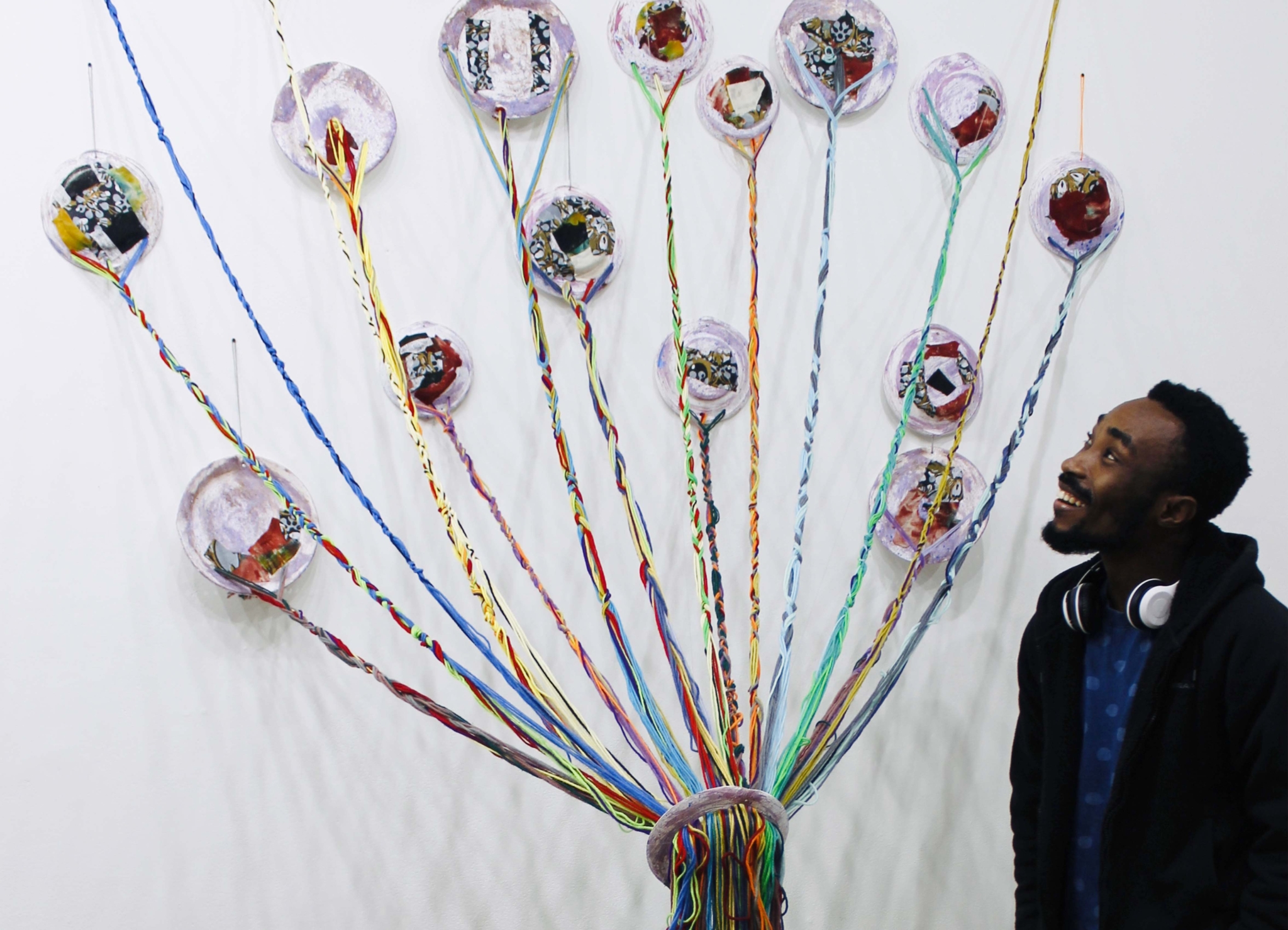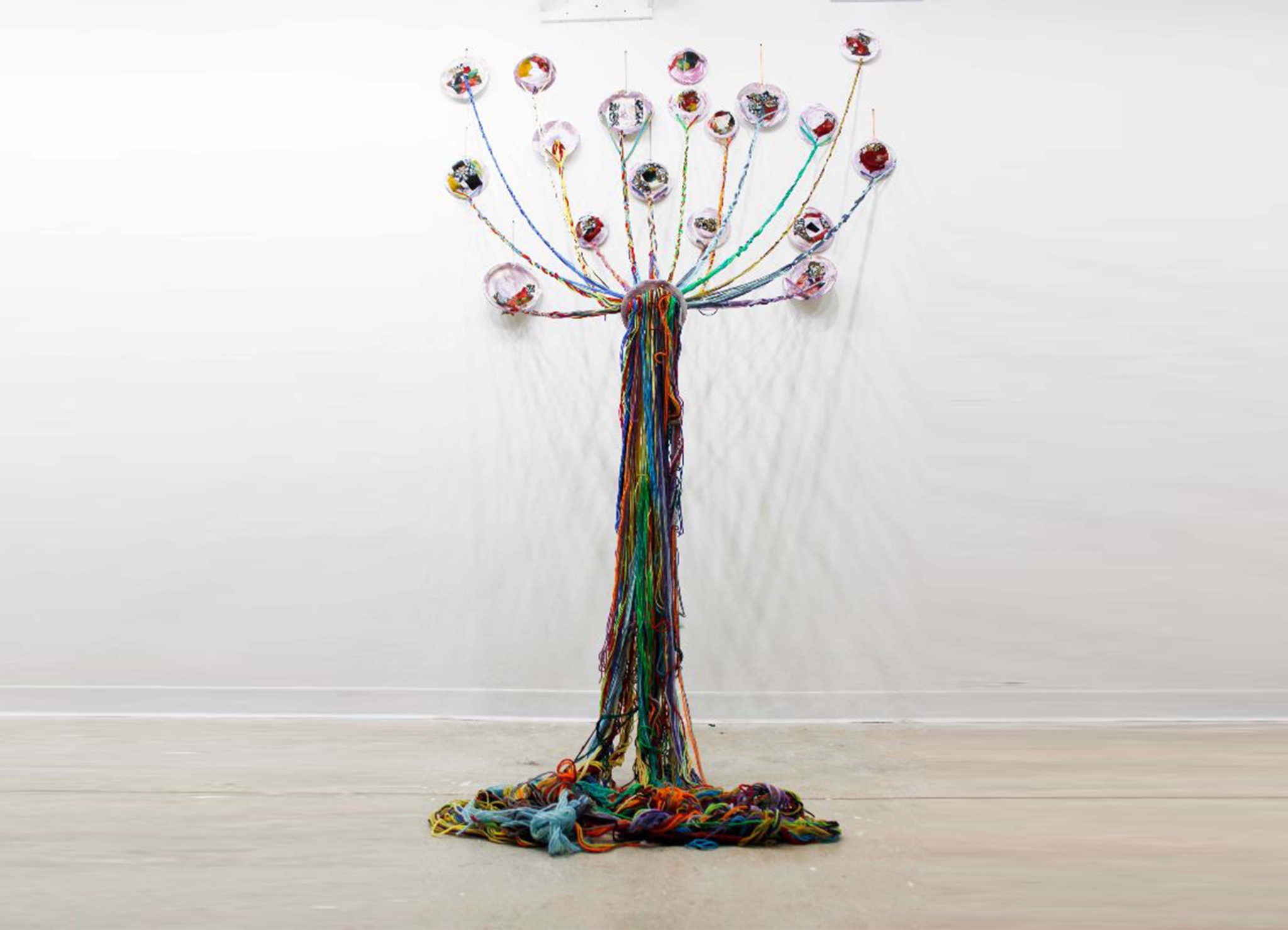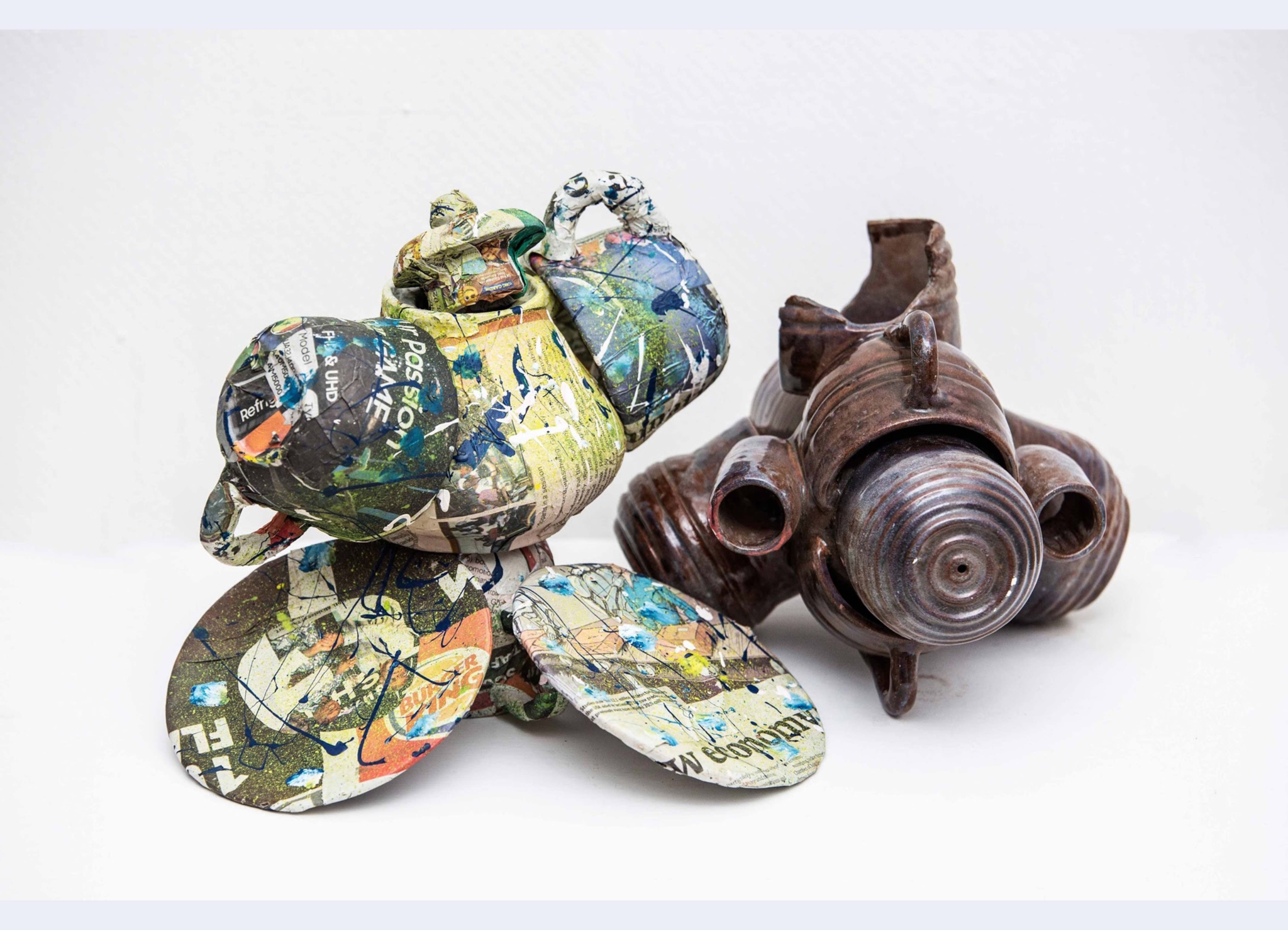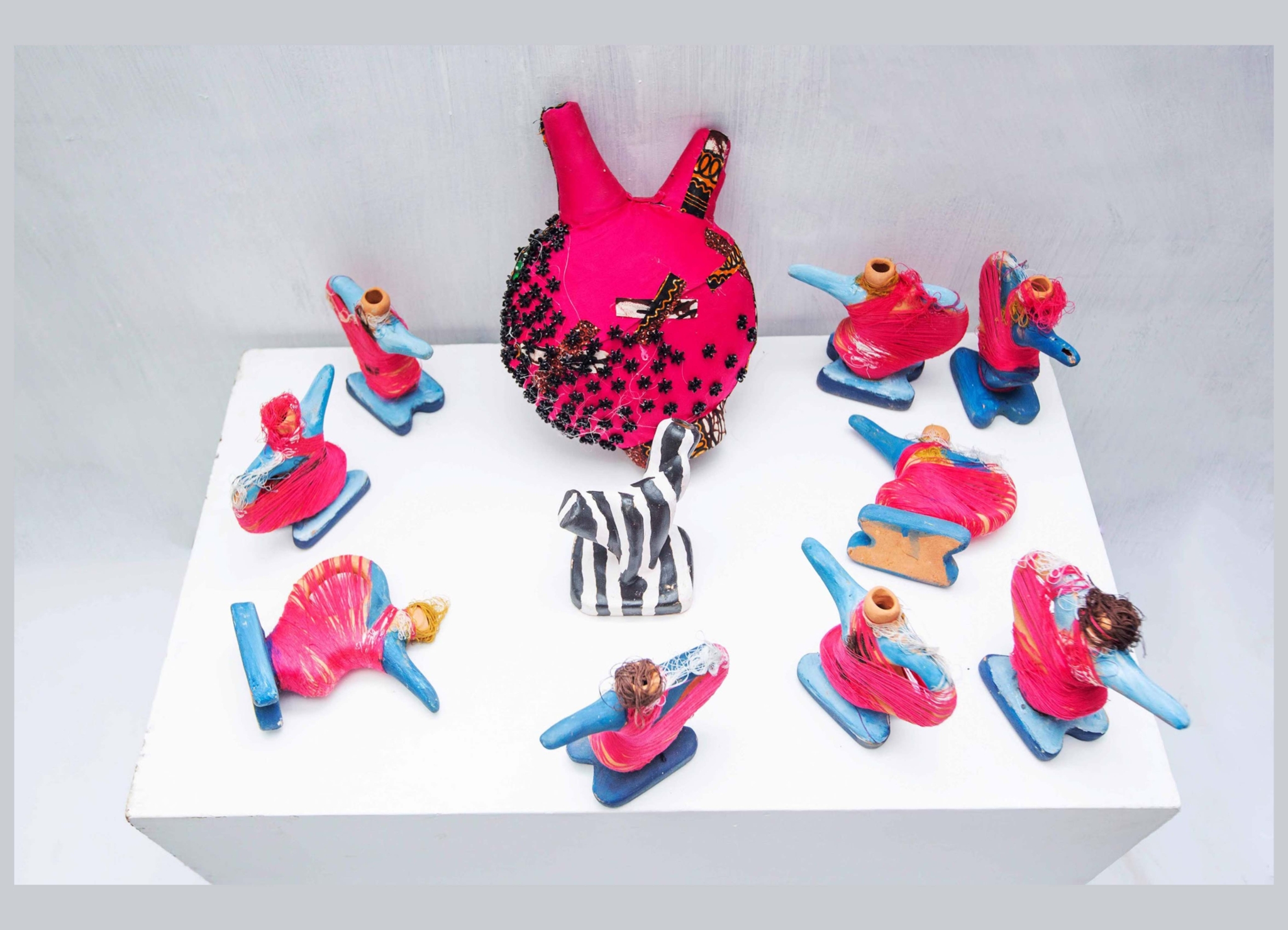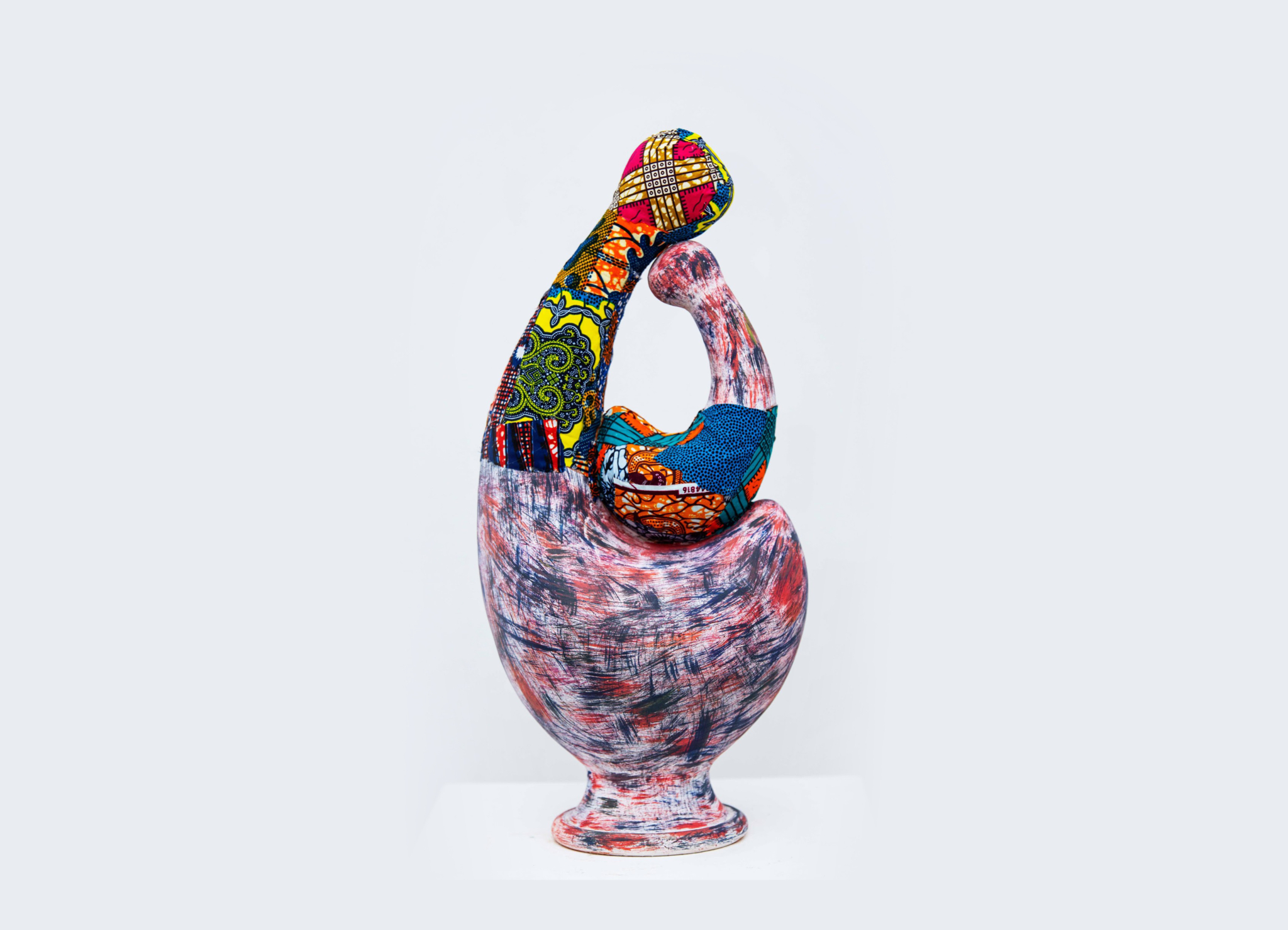
Eugene Ofori Agyei’s interdisciplinary practice examines the emotional and psychological terrain of movement, tracing the complexities of departure, arrival, and dwelling within liminal space. Through sculptural, installation, and performative works, he merges clay, batik fabric, yarn, and found objects to articulate identity as layered, negotiated, and continually in formation, engaging the intertwined conditions of belonging and migration. Clay operates simultaneously as earth and body—a material that holds memory while embodying processes of yielding, resistance, fracture, and endurance. Its dual capacity for fragility and strength mirrors the tensions inherent in diasporic life, where permanence and displacement remain in constant negotiation. Batik fabric, often associated with West African identity yet historically rooted in Indonesian wax-resist traditions and shaped by colonial trade networks, becomes a critical site of inquiry. Its patterned surfaces index histories of circulation, translation, and adaptation. Within his work, batik functions as both skin and archive, carrying the imprint of transnational movement. Yarn introduces a material language of binding and repair. When wrapped, stretched, or threaded through ceramic forms, it activates spatial tension and suggests tenuous continuity—gesturing toward the invisible threads that connect homeland and host land, past and present. Found objects, already inscribed with labor and time, enter the work as carriers of lived experience. Recontextualized, they shift from the ordinary to the resonant, embodying survival and transformation. By assembling these materials, he constructs a visual and tactile vocabulary through which identity is understood as fluid, layered, and continuously evolving. His practice further destabilizes conventional distinctions between craft and fine art, ceramics and sculpture, to explore belonging, visibility, and transformation, mapping the quiet architecture of diasporic existence.